
Archive by Author
Your Brain at Work: What to Do When There’s Too Much to Do

Your Brain at Work: What to Do When There’s Too Much to Do

Years ago, when I was editing a manuscript by David Rock, the acclaimed leadership coach, neuroscience guru, and author, I learned that David did most of his writing on transoceanic flights. At the time, I assumed it was because he was simply too busy to find any other time to write.

Now I wonder if it is because David was applying his understanding of neuroscience: productive deep thinking thrives when we can eliminate distractions, focus on one high-order task at a time, isolate from technology and interruptions, and have the opportunity to take quick enjoyable breaks. A first-class seat on a long flight is just this kind of environment (assuming you’re not sitting next to your boss or a chatterbox.) CONTINUE READING…
Comments ( 0 )
Why We Need a Workers’ Bill of Rights Now

Why We Need a Workers’ Bill of Rights Now

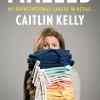
In 2006, Caitlin Kelly was laid off as a reporter from the New York Daily News. Suddenly, she found herself underpaid, hustling for freelance work, and socially isolated at age 50. Eager for some cash and a chance to get away from her computer, she took a retail floor job at North Face, the upscale outdoors clothing chain. The result was her wonderful, new book, Malled: My Unintentional Career in Retail (due out in April).

Malled is reality journalism at its best, a raw education in the nature of American low-wage retail work before and during the devastating recession of 2007-2009. It also is a searing narrative of Kelly’s experiences working in an upscale mall, laced with a national investigative skewering of the awful working conditions, low wages, and robotic big brother corporate leadership in the US retail sector. CONTINUE READING…

Comments ( 0 )
4 Steps to the Next Breakthrough Idea

4 Steps to the Next Breakthrough Idea

Thousands of business books are published every year, so sometimes very good ones get overlooked. Seizing the White Space, by Mark Johnson, a management consultant, is one of those books that deserves a second look.

Published last year by Harvard Business School Press, the book offers a road map to innovation. Specifically, it is about”white space plays”–strategies to leap frog out of crowded markets into new, open spaces by radically changing your business model. Johnson, chairman of Innosight, a consulting and investing company that he co-founded with Harvard Business School professor Clayton M. Christensen, delivers a case-study rich guide that shows how changing your company’s business model can enable you to dominate new markets. CONTINUE READING…

Comments ( 0 )
Black Swan Lessons on the Japanese Disaster

Black Swan Lessons on the Japanese Disaster

When the Japanese earthquake, tsunami and nukes crisis hit, Nassim Taleb, author, former options trader, and Distinguished Professor of Risk Engineering at New York University, was besieged with 600 interview requests. It’s not surprising: Taleb popularized the phrase “black swan” in his 2007 best-selling book of the same name.

Taleb isn’t giving interviews ( “I think for a living & write books not interviews,” Taleb writes on his website) so I took another look at his writings and tried to glean where he might stand. First, some background: A “black swan” is a metaphor used by philosophers over the centuries to capture the surprise effects of scientifically improbable and therefore unexpected events on history, inspired by the 17th century discovery of black swans in Australia when biologists had previously declared all swans were white swans. CONTINUE READING…

Comments ( 0 )
Q&A with Robert Dilenschneider: How to Manage a PR Disaster

Q&A with Robert Dilenschneider: How to Manage a PR Disaster

As the catastrophic events in Japan continue to unfold, the question arises: how should you handle it if your company is enmeshed in a public disaster? BNET blogger Ira Kalb argues General Electric, which designed the troubled nuclear plants, should use fact procedure to restore its damaged image, while BNET blogger Kimberly Weisul explain why corporate apologies often fall short.

When it comes to crisis public relations, however, Robert Dilenschneider is a leading authority. He is the author of many books, including The AMA Handbook of Public Relations, and CEO of The Dilenschneider Group, the public relations firm. (Disclosure: I published Dilenschneider, when I was an editor at McGraw-Hill.) So I contacted to see what thoughts he might have. In an email, Dilenschneider discussed everything from what the U.S. nuclear industry should be doing (but isn’t) to how to calm a jittery public.

CONTINUE READING

Comments ( 0 )
.entry img.no_border { background: none ; border: 0 none; padding: 0; }